
Most people starting out either go too light and wonder why they're not feeling anything, or they go too heavy and spend the next week with a sore lower back. Neither is useful. Getting the load right from the first session makes a real difference to how quickly you progress, and how long you stick with it.
There's a straightforward answer backed by decades of military load carriage research, and it's worth understanding why the number is what it is rather than just picking something and hoping for the best.
Key Takeaways
- The right starting weight depends on your size and fitness: under 70kg start with 5kg, 70-90kg start with 5-10kg, over 90kg or with a strong fitness background 10-15kg is appropriate.
- A 2022 biomechanics review found rucksack-related activities accounted for 15% of new injury encounters in military trainees, mostly from loads that were too heavy or progressed too fast (Orthopaedic Journal of Sports Medicine).
- The upper ceiling for recreational rucking is roughly 30% of body weight. Most people never need to go above 15-20%.
- When stepping up a load, cut your distance significantly and rebuild before adding more weight. Distance and pace are levers, not just the weight on your back.
What does the research actually say about starting weight?
The standard starting point, around 10% of your body weight, holds up well across both military research and civilian coaching. For most adults, that puts you in the 7-10 kg range. It's enough load to meaningfully increase the metabolic demand of a walk without putting your joints and spine under the kind of stress that accumulates into injury.
A 2022 review of military load carriage biomechanics, published in the Orthopaedic Journal of Sports Medicine, found that rucksack-related activities were the second most common source of new injuries in trainees, accounting for 15% of all injury encounters. The injuries weren't random. They were concentrated in individuals carrying loads proportionally too heavy for their fitness level, or who increased load too quickly before their tissues adapted.
That same research identified that forward trunk lean increases as pack weight rises, placing progressive stress on the lumbar spine, intervertebral discs, and the stabilising muscles of the lower back. Below about 15% of body weight, most people can maintain natural gait. Above 20-25%, compensatory mechanics start to kick in.
For more on how a loaded pack affects your spine, see our guide on rucking and back pain.
The 10% rule isn't arbitrary. It sits in the range where the caloric and cardiovascular benefit is genuine (meaningfully above an unloaded walk), while the biomechanical risk remains low for someone without a specific load carriage background.
What weight should you start with?
The right starting weight depends on your body weight and current fitness level. The 10% rule translates into practical terms like this:
- Under 70kg: Start with 5kg.
- 70-90kg: Start with 5-10kg depending on fitness level. If you're already training regularly, 10kg is the better starting point. If you're more sedentary or new to any structured exercise, start at 5kg.
- Over 90kg, or under 90kg with a strong fitness background: 10-15kg is appropriate.
For most people, 10% of body weight puts you somewhere in the 5-10 kg range. Both are genuine starting loads that deliver real results. On a well-fitted pack with the hip belt engaged, either weight feels very different to carrying the same in an unstructured bag.
If you're under 70kg, or you're in the 70-90kg range but coming from a sedentary baseline, 5kg is the sensible starting point. You'll still feel it after 40 minutes. Build to 10kg over the first four to six weeks once sessions feel consistently manageable.
For those 90kg-plus with an existing training background, 15kg from the start is within range. That said, even experienced gym-goers often find the first couple of weeks of weighted carrying harder than expected. Spending two to three sessions at 10kg before loading up to 15kg is worth doing.
Check out the Rucking for Beginners guide for full session structure and weekly programming to pair with your starting load.
How to progress your load safely
The guiding principle is to change only one variable at a time. Distance, pace, terrain, and load are all levers. Pull too many at once and you can't tell what's working, and you significantly increase injury risk.
A sensible progression for a new rucker looks roughly like this. For the first four weeks, keep the load constant and focus on building up to 45-60 minute sessions, three times per week. Once that feels manageable, with consistent pace, quick recovery, and no joint pain after sessions, you add weight. Plates come in 5kg, 10kg, and 15kg, so 5kg is the minimum practical jump. Give your body roughly two weeks to adapt at each new load. Distance and pace are levers in their own right, not just the weight on your back.
That jump can feel substantial. When stepping up, reduce your distance by roughly a third first. If you were doing 8km sessions, drop to around 5km and rebuild that distance before adding more weight. If you want to add a kilogram or two in the meantime, a water bottle or a couple of heavy books work as a temporary bridge. Just be aware they'll shift around more than a plate and won't sit in the weight pockets. The more reliable approach is adjusting pace, distance, or terrain rather than adding improvised weight.
A useful ceiling for recreational ruckers: most coaches and programming guides put the upper limit at around one-third of body weight. That's roughly 25 kg for a 75 kg person. The majority of recreational ruckers, including those training for events, never actually need to go above 15-20% of body weight. The returns diminish, the injury risk rises, and the activity stops being enjoyable.
If you're rucking primarily for weight loss or cardiovascular fitness, a moderate load of 10-15% of body weight, sustained over longer sessions, will serve you better than piling on more plates.
How do you know if you've got the weight wrong?
Getting the load wrong in either direction gives you pretty clear feedback, if you know what to look for.
Too heavy. Joint pain during or after the session, particularly in the knees, hips, or lower back, is the main signal. So is a pronounced forward lean that you can't correct, or shoulder and neck tension that builds throughout the walk. If your pace drops significantly in the second half of a session because the load is grinding you down, that's too much weight for your current fitness level. Drop back to your previous load and rebuild.
Too light. If you finish a 45-minute session feeling like you've barely worked, your heart rate never climbed, and there's no sense of muscular fatigue, you're probably under-loaded. This is less of a problem than going too heavy, but it does limit the training benefit. Add a plate and see how the next session feels.
A correctly loaded ruck pack should feel challenging by the 20-30 minute mark of a session, not immediately, and not only in the final five minutes.
Frequently Asked Questions
How do I know when I'm ready to increase my rucking weight?
Two things to look for: your sessions feel consistently manageable (you're finishing at a good pace, recovering well between sessions, no joint pain the day after), and you've had at least two weeks at your current load. When both are true, you're ready to step up. If sessions still feel hard, stay where you are. Fitness adapts faster than tendons and bone, so patience here pays off.
Can I use gym weight plates?
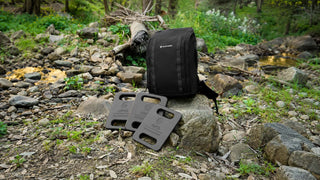
Standard circular gym weight plates (the kind you'd load onto a barbell) can work if they fit the pack physically. The limitation is that they're round, so they can't sit flat against your back the way a rectangular rucking plate does. They'll rock and shift position as you walk, which creates uneven loading and can dig in over longer sessions. Ruckaway's weight plates are cut flat and sized specifically to fit the weight pockets. That's the main practical difference.
How often should I increase my rucking weight?
Once you're completing sessions consistently without discomfort, add the next plate (5 kg increment) and give your body around two weeks to adapt before going heavier again. When you first move up, shorten your distance for the first couple of sessions rather than trying to match your previous distance straight away. If the increase causes joint pain that persists beyond the first session, drop back and build more time at the lower load.
Can I add weight in smaller increments than 5 kg?
Plates jump in 5kg steps, so the minimum load increase is a full plate. If that jump feels too big, there are two options. First, you can add a kilogram or two using items like a full water bottle, a couple of heavy books, or a sandbag insert. They'll work as a temporary bridge, but loose items shift as you walk and won't sit in the weight pockets the way a plate does. Second, and usually the better option: adjust volume instead. Drop your distance by roughly a third when stepping up to the next plate and rebuild from there. Most people find the load feels very manageable after a few sessions once their body has adapted to carrying it.
Is shoulder soreness from rucking normal?
Upper trap soreness from strap pressure is very common in the first few weeks, especially as you increase load. Your upper traps are working constantly to stabilise the weight, and if they're not yet conditioned to it they'll feel it. It typically resolves as the traps strengthen over three to four weeks of regular training. Make sure your pack is set up correctly: shoulder straps snug but not cutting into circulation, and hip belt cinched to shift some load off your shoulders. Sharp or persistent pain in the shoulder joint itself is different and worth dropping your load to investigate.
Can I ruck every day?
Most people do well on three to four sessions per week, with rest days in between. Daily rucking is possible once you've built a solid base over several months, but it's not necessary and it increases cumulative load on joints and connective tissue. If you want to stay active on rest days, an unloaded walk is a good option.
The short version
Start at roughly 10% of your body weight: 5 kg if you're under 70 kg or new to exercise, 10 kg if you're in the 70-90 kg range and already active, 10-15 kg if you're over 90 kg or have a strong fitness background. Add weight in 5 kg increments, allow two weeks to adapt at each load, and don't increase distance and weight at the same time.
If you're putting a kit together, the Ruckaway backpack has built-in weight pockets that hold load elevated against your upper back, and the weight plates are cut specifically for rucking, not improvising with gym weights that weren't designed for it.
