
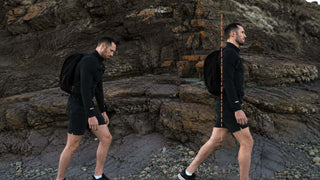
Strapping weight to your back and walking around with it. If you've ever had a dodgy lower back, that probably sounds like a fast track to trouble. It's the most common worry we hear from people curious about rucking, and on the surface it's fair enough. We spend our whole lives being told to protect the back, lift with the legs, and not carry heavy things.
But for most people, a well-fitted ruck does the opposite of what they're afraid of. Worn properly and loaded sensibly, it tends to build a back that copes better with everyday life.
This is worth getting right. Low back pain is the leading cause of disability on the planet, affecting around 619 million people (Global Burden of Disease study, 2021). So the question deserves a proper answer rather than a slogan.
Key Takeaways
- Low back pain is the world's single biggest cause of disability, affecting roughly 619 million people (Global Burden of Disease study, 2021).
- What tends to hurt backs is sitting all day and carrying weight unevenly, like a one-shoulder bag, not symmetric load carried upright.
- A ruck worn high and balanced loads your spine the way it's built to be loaded, and keeps you standing tall while it works your core, glutes, and the muscles either side of your spine.
- Walking is well proven for back health: Australia's WalkBack trial (The Lancet, 2024) found a progressive walking program nearly doubled the time before back pain returned (208 days versus 112), and adding load makes the muscles that stabilise your spine work harder.
- Start light (5 to 10kg), build slowly, keep the load high and even, and see a physio first if you have an acute injury or a diagnosed back condition.
Why does rucking sound bad for your back?
The instinct is understandable. Add weight to a spine that already niggles and you'd expect it to complain. And plenty of everyday load genuinely does cause pain, so the worry isn't coming from nowhere.
The trap is lumping every kind of weight-on-the-body into one bucket. A slouched laptop bag hanging off one shoulder and a balanced rucksack sitting high on your back do very different things to your spine. One drags you sideways for hours. The other keeps you upright and shares the load evenly down through the middle of you.
Once you separate those two, the picture changes.
What actually causes back pain?
For most people, the big culprits are being sedentary and loading the body unevenly. Hours of sitting, then a heavy bag slung over one shoulder, then more sitting.
Research bears this out. Studies on one-shoulder bag carrying link it to poor sitting posture and higher rates of back pain, because the body twists and leans to compensate for the uneven weight (Frontiers in Public Health, 2026). Biomechanics work shows that carrying a load on one side increases compression and shear through the lower spine compared with the exact same weight carried evenly across both shoulders.
Your spine is a load-bearing structure. It's built to carry weight when you're upright and balanced. What it handles poorly is being held in a slumped, twisted, or one-sided position for long stretches. For most of us, that's the desk chair, not the backpack.
So the honest answer to "is weight bad for my back" is that it depends almost entirely on how the weight is carried. Symmetric and upright is close to what your body evolved to do. Lopsided and slumped is the version that grinds people down.
How a properly worn ruck loads your spine the right way
A ruck done well ticks the boxes your back actually wants. The weight sits high against your upper back and close to your body, so it travels straight down through your spine rather than pulling you backwards. It's even across both shoulders, so there's no twist. And carrying it makes you stand tall, because slumping under a load is uncomfortable and your body quickly sorts that out for you.
While you walk, that load quietly works the muscles that hold you upright: your core, your glutes, and the muscles running either side of your spine. These are the same postural muscles that switch off when you sit all day. Rucking asks them to switch back on and keep working for the length of a walk.
The hip belt on a proper ruck pack adds stability and takes a little pressure off your shoulders, though on a rucking setup the main load is meant to ride high on your back rather than on your hips like a hiking pack. Keep the weight sensible, build it gradually, and you're strengthening the exact system that keeps your back resilient.
The case for rucking if you sit at a desk
This is the group I'd point to first. Most of us aren't soldiers on a loaded march. We're sitting 8 or more hours a day, and that's the real problem for our backs.
Sitting for long stretches lets the postural muscles go quiet, shortens the hip flexors at the front of your hips, and slowly trains you into a slump. You can feel it by mid-afternoon. Standing desks help a bit, but they don't reload the system or get you moving.
A ruck after work, or a loaded lap at lunch, is a direct counter to all of that. You're upright, loaded through the right line, moving, and outside. Twenty to thirty minutes with a modest weight does more for a desk-bound back than another stretch at the desk. You don't need to be training for an event to get the benefit, and the weight is what sets it apart from just another walk.
New to rucking? Our rucking for beginners guide walks you through your first few weeks, session by session.
What does the research actually say?
Walking is one of the best-evidenced things you can do for your back. Australia's WalkBack trial, run out of Macquarie University and published in The Lancet in 2024, followed 701 adults who had recently recovered from low back pain. The half given a progressive walking program went a median of 208 days before their pain returned, compared with 112 days for the group that did nothing. Nearly double the pain-free stretch, and roughly half the recurrences.
Rucking adds a training stimulus on top of that. When you carry weight, the deep muscles either side of your spine, the erector spinae and multifidus, work noticeably harder than they do walking empty-handed (load carriage research, Bioengineering, 2025). Applied gradually, that extra demand is how you strengthen the exact muscles that hold your lower back steady. You get the upright, low-impact movement the walking research points to, plus a load that builds the support system around your spine.
How to ruck without hurting your back
The safe path is boring and it works. Start light, 5 to 10kg (around 10% of your body weight). Keep the load high and even in the pack. Stand tall with a neutral spine rather than leaning forward into it. Begin with short walks and add time before you add weight, changing only one thing at a time. For the full breakdown, see our guide on how much weight to ruck with.
One honest caveat. If you're in the middle of an acute back injury, or you've got a diagnosed condition like a disc problem, check with a physio or GP before loading up. Rucking is gentle and scalable, but a professional who knows your back is worth a quick conversation first.
Frequently Asked Questions
Can I ruck if I already have back pain?
Often yes, but get the timing right. For general niggles and stiffness, gentle loaded walking can help, and the WalkBack trial (The Lancet, 2024) showed walking programs cut how often back pain returns. If you're in an acute flare-up or you have a diagnosed condition like a disc injury, see a physio before adding weight. When you do start, begin at 5kg and keep sessions short.
Will rucking improve my posture?
It tends to, because a well-worn ruck won't let you slump comfortably. The load sits high on your back and pulls your shoulders into a taller position, while your core and the muscles along your spine work to hold you there. Over regular sessions that trains the postural endurance most desk workers lose from sitting. It's not an instant fix, but it's a genuine nudge in the right direction.
How much weight is safe to start with?
Around 10% of your body weight is the well-established starting point, which for most people means 5 to 10kg. It's enough to strengthen the muscles supporting your spine without overloading your joints. Under 70kg or new to exercise, start at 5kg. Build up slowly over the first few weeks, and add weight only once your current load feels genuinely easy.
Is rucking or running easier on your back?
Rucking is lower impact. Running sends repeated ground-reaction forces up through your spine with every stride, while rucking keeps you walking, so there's no pounding. You're adding load, but it's carried smoothly and symmetrically rather than jolted. For people who find running aggravates their back, rucking is often a far more comfortable way to get a real cardiovascular and strength workout. For the full side-by-side, including calories, see our guide to rucking vs walking vs running.
The short version
Rucking sounds like the last thing a sore back needs, but for most people it's one of the better things going. What hurts backs is sitting all day and carrying weight unevenly. A ruck worn high and balanced does the reverse: it keeps you upright, loads your spine the way it's built to be loaded, and strengthens the muscles that hold you together. Start light, build slowly, and check with a physio first if you're carrying an injury.
If you're putting a kit together, our rucking backpack holds the load high and tight against your upper back where it belongs, and our weight plates are cut flat to sit properly against your spine rather than rocking around like gym weights.