Everything you need to start rucking. Our rugged backpack paired with a 5kg iron plate — comfortable, stable, and built to progress with you as your fitness grows.
Start your rucking journey with everything you need. Our rugged 1000D Oxford Nylon backpack combines with a 5kg iron weight plate for the perfect beginner setup. Superior padding and elevated weight pockets ensure comfort from day one, while the compact iron plate loads effortlessly and sits stable against your back. Built to withstand the toughest conditions and progress with you as you build strength and endurance.
Features
Elevated Weight Pockets: Secure, optimised pockets for our Rucking Weights.
High-Density Padding: Shoulder and back comfort for heavy loads.
Air Flow Channel: Rear ventilation to prevent overheating.
Load-Bearing Frame: Maintains structural integrity under immense weight.
Detachable Hip Belt: For added weight distribution support.
Adjustable Sternum Strap: Customisable for a secure, cinched fit.
Rapid-Access Top Pocket: Critical supplies always at the ready.
EDC Top Handle: For unweighted everyday carry convenience.
Organised Interior: Multiple compartments for everyday carry.
Daisy Chain Webbing: Easily attach external gear and accessories.
Hydration Integration: Drinking tube exit port for long hauls.
WEIGHT CAPACITY
The pack has two weight pockets. Each pocket holds up to 15kg:
1 x 15kg plate
1 x 10kg + 1 x 5kg
3 x 5kg
That's up to 30kg of plates across both pockets, with the main compartment still free for everyday gear.
WEIGHT PROGRESSION
Don't go max weight from day one. A good rule of thumb is to start at around 10% of your body weight, then build up in 5kg steps as each load starts to feel easy.
Under 70kg: start with 5kg
70-90kg: start with 5-10kg (10kg if you already train regularly)
90kg+ or a strong fitness base: 10-15kg
SPECS
Main material: 1000D Oxford Nylon Fabric
Back panel, underside of shoulder straps, and interior: 210D High Tenacity Nylon
Dimensions: 460mm (H) x 290mm (W) x 120mm (D)
Capacity: 16L
SHIPPING & RETURNS
Australia-wide shipping
Free shipping over $300*
30-day returns (ex. shipping)
1-year warranty
*Excludes remote areas
Turn Walks Into Workouts
Walking is already the most underrated form of exercise. Rucking makes it elite.
By adding a weighted pack to your daily walk, you build real strength, burn significantly more calories, and improve your long-term health — all without setting foot in a gym. No complicated programming. No expensive memberships. Just load up, step out, and let every kilometre do the work.
Ruckaway gives you the gear to do it properly, from day one.
Practical Fitness
Can’t find time for the gym? Rucking turns everyday walks into calorie-crushing workouts.
Cost-Effective
No need for pricey gym memberships; the great outdoors is your fitness studio.
Calorie Incinerator
Burns up to 3X more calories than walking and nearly as much as jogging.
Posture and Back Health
Build a rock-solid core and perfect posture to counter the slouching effects of office life.
Anti-Aging, Unleashed
Strengthen bones and fortify joints to build an unbreakable foundation for longevity.
Spare Your Joints
Boost your cardio without the pounding of running - your knees and hips will thank you.
Mood and Sleep Enhancer
Outdoor exercise benefits your mental state and improves sleep quality.
WHAT RUCKERS ARE SAYING
I’ve been hauling around a 30kg weighted vest for about 7 years and it absolutely blitzed my shoulders and neck. The Ruckaway is an absolute game changer.
Adrian S.
I’ve used many weight vests and packs, and this is the most comfortable and well put together one I’ve owned.
Joffrid M.
The weights sit close to your spine and don’t pull your centre of gravity backwards making hiking so much easier than a conventional backpack.
Peter S.
I've officially retired my old sand vest (RIP to the chest bruises) and couldn't be happier with the upgrade. It's a total gamechanger!
Natalie L.
As an exercise physiology business, we now recommend Ruckaway to our clients to get more out of their weekly activities — even just walking their dogs!
Max M.
I am 64 & started rucking after reading Peter Attia's OUTLIVE. The quality is excellent, sturdy and comfortable.
Sandreine K.
My wife and I are seniors who use it almost every day. Rucking has transformed our health — stronger backs and core, and better balance.
Brent H.
Every stitch, strap, and buckle feels designed to last. The balance is perfect, the padding is just right — it handles weight comfortably on long walks.
Daniel S.
I had no time for the gym. Now I get the dog walked and a good workout at the same time. No back, hip or shoulder soreness after a fortnight of daily use.
Michael H.
ELEVATED POCKETS
Contoured pockets seamlessly integrate with our Rucking Weights for a locked-in, stable carry without excess shifting. Strategic placement promotes elevated and centred weight distribution to alleviate back strain.
SUPERIOR PADDING
Plush shoulder and back padding lined with low-friction 210D High Tenacity Nylon cushions heavy loads. High-density foam distributes weight evenly to prevent hot spots and fatigue for uncompromising comfort.
DETACHABLE HIP BELT
This removable, adjustable belt transfers weight to your hips, engaging your core muscles. The durable quick-release attachment keeps the pack stable and prevents slipping when loaded heavy.
Ruckers in the Wild
WHAT IS RUCKING?
Rucking is as primal as fitness gets. Simply put, it's walking with a weighted backpack. This form of exercise taps into the age-old practice of moving with a load on your back.
I can run, but my knees don’t love it. In the past month, I’ve been rucking instead — hiking or walking with weight on my back — 2-4x per week. I’m astonished by how much I love it.
Tim Ferris
Rucking was found not only to have no association with low back pain, it even helped prevent it. The weight pulls people out of the slumped-over position that’s so common among desk workers.
Michael Easter
I’ve become semiobsessed with rucking. The fifty-to sixty-pound pack on my back makes it quite challenging, so I’m strengthening my legs and my trunk while also getting in a solid cardiovascular session.
Dr Peter Attia
It works your cardio and strength at once — cardio for people who hate to run and lifting for people who hate the gym. Rucking is perhaps the best form of exercise you can do.
Michael Easter
I tend to ruck 1x per week and get the other zone 2 cardio in other ways. I also tend to do real work or listen to podcasts while I do it.
Dr Andrew Huberman
Real Ruckers. Real Results.
Thousands of kilometres rucked. Here's what people are saying.
Customer Reviews
Overall rating: 4.9 / 5 from 176 reviews.
Love it. It just works. Have had 2 other types of ruckpacks and this one is far superior.
It sits well. Can load it up with weights that stay put and hug your back. Room for water. I would get the water pack sold by these guys on reflection. I tried it with my camelback and whilst it sprt of works the one that comes with it is much better suited and fits it better.
First walk was 5km with 15kg and it felt great. Thanks for making an awesome product. Happy Rucking all 😎
From hearing about the Rucking world from one of my workmates to actually researching extensively and purchasing my first pack and weights, it was a matter of a week. I grew very excited to receive my package - backpack with 5KG and 10KG weights, and the free camel back bladder. It arrived super quickly and on my first WFH day I chose to take the pack with the 5KG weight for a spin - LOVED IT. And am addicted now. Just this morning, after a few weeks I have trialled the 10KG and it feels a nice step up into challenging territory. Can't wait to rack up some more ks rucking!
I’m 61 and recently retired after years of driving night-shift trucks, so I’ve been getting fit by rucking 10 to 12 km most days with a homemade pack. I finally upgraded to an Australian-made Ruckaway, and it’s a fantastic piece of gear—well-built, comfy, and super adjustable. It was definitely worth the money. I’ve already put 50 km on it and highly recommend it to anyone else. Big thanks to Simon and the team.
Having 2 dogs makes Rucking a no brainer for me. I'm going out for 5-8K come rain or shine and to simply throw on a backpack makes incidental exercise even more beneficial.
I highly recommend this backpack and the 10Kg weight is more than manageable.
Clive in Sydney Australia
My first rucking experience was fantastic! Having previously tried walking with a weighted vest, I found the backpack far more comfortable and enjoyable. The weight sits securely and feels evenly distributed across my back, rather than heavy or concentrated on my shoulders. The supportive waist straps also help stabilise the load, making it feel much less “weighty” than expected. This allowed me to walk comfortably and enjoy the experience without feeling weighed down. I’m already looking forward to my next ruck!
After using regular backpacks stuffed with weights, I'm so happy my wife and I upgraded to Ruckaway sets. Super comfortable and easy to swap out, we're extremely happy with the product and service, and keen to get rucking more often
Loving the bag and the water bladder so far. I was using an old backpack with weights previously but decided to upgrade to something better as I was worried it would rip. So far the Ruckaway has been very sturdy and much more comfortable than my old backpack when weighted up.
I put a few barbell weight plates I had spare (currently a 5kg, a 2.5kg and a 1.75kg), they fit perfectly in the pockets. That along with the filled 2L water bladder definitely gives a good workout! I've been using it about 4 times a week, I just throw it on when I'm taking my dog Diesel out for a walk. He's only got 3 legs but it doesn't slow him down any! We usually go about 3km over 45 minutes or so. I love that its a way to get a bit more exercise with something I'd be doing anyway. I'm hoping to eventually add another couple kgs, my goal is to get to 15kg but might take a while - I'm 45 and while I run regularly I'm not the strongest!
Set up feels good overall, although it took a few walks to sort of dial in the straps. I found that making the arm straps tighter really helped, along with tightening the sternum strap and the hip belt, and trying to keep a more upright posture. After that my shoulders, back and neck felt a lot better. Also I sewed on a cool patch :)
Thanks for making a great product!
After completing two hikes with my new Ruckaway backpack loaded with 10kg, I’m completely hooked. In the past, I tried weighted vests, but they always caused discomfort in my neck and traps. In contrast, the Ruckaway backpack sits high and comfortably without digging in or causing any strain. The quality is outstanding; everything from the backpack itself to the weights and hydration pack is extremely well made. I’m genuinely impressed.
Bought 2 x 15kg + ruck bundles plus a 10kg and 2 x 5kg additional plates so now I’m pretty well covered for weight combinations for myself and my partner rucking together at the same time. Heaps of additional room to carry other things as well like water, rain jackets, jumper etc. In-built padded waist strap is super handy, too. I also use one of the plates in my normal work bag to sneak in more rucking on my commute to the train station and back.
We absolutely are addicted…. First time using our Rucksack and we both ( hubby and I loved it so much ) I have the 5kg and hubby has the 10kg. I’m so keen to go up to the 10kg in the not to distant future. We have told so many people about this journey and I’m so excited to keep on Rucking …..
I bought the Ruckaway Backpack 2 weeks ago along with 30kgs of weight plates, and 2 Hydration Bladders. I was super impressed with the quality of the backpack upon opening the box - and I have very high standards and expect the best when paying a premium price. The Ruckaway Backpack and weights are worth every dollar, and I’m thrilled with the purchase! I’m currently training for the Everest Base Camp trek (amongst others), and have done 3 x 15km hikes in the last 2 weeks with the Ruckaway Backpack, 10kg weight plate & hydration bladder. It’s a brilliant training aid in combination with hill training. I will gradually build up to carrying 30kgs over the coming months in preparation for EBC. The pack fits really well, the weight sits high on your back, and the quality outside material feels close to indestructible. The pack has very high quality inner lining plus pockets on the inside for wallets & keys, and plenty of space for the hydration bladder, rain jackets, snacks and snake bite bandages etc. I would highly recommend the Ruckaway Backpack (and weight plates) for anyone wanting to get super fit, fast!
Matt M from Melbourne
Now in my 60s I was looking for a simple, scalable, and effective way to build strength and cardiovascular endurance at the same time. I chose the Ruckaway backpack which I am very happy with and now enjoying the benefits of rucking whilst walking the pooch as an effective way to turn a routine daily stroll into a great low-impact cardio and strength workout and burn up more calories than standard walking. Excellent product and highly recommend.
Just wrapped up a 6km hike around Lysterfield Lake with the Ruckaway, and it was a fantastic experience. The pack sat comfortably the whole way, kept the weight stable, and made the hike feel smooth and enjoyable. Really impressed with how well it handled the distance -definitely sticking with it for future rucks.
First walk with my new Rockaway bag.
Great experience, feels a little heavy first up, but that what this is all about.
Used it on my usual 6km walk to the river and back in Perth WA.
The bag is sturdy, well made and the weight in my case 10kg sits very well in the bag.
I recommend the 10kg over a walk of ~6km for maximum results. This is my new addition to my keep fit arsenal. Really who needs the gym?
My second walk felt a little easier.
These are the ducks nuts, super comfy, sits great on the back for long hikes can carry all the other gear you would want to have with you as well. Really well made and designed.
Well worth it . If you want a quality one look no further. The follow ups from Simon are awesome too to make sure you are happy. Its almost like he wants you to find a fault , I didnt. 🤘
Great product! Inflamed my IT band running so I was after low impact cardio that kept my heart rate in zone 2 as walking alone doesn't do it. I found ruckaway and haven't looked back, its tough, rugged and superbly put together with the added benefit of being waterproof, as i found out today whilst being caught in a storm.
Strongly recommend to anyone.
The ruckaway pack has been great for keeping up some strength while recovering from a recent injury. Walked around 10km with it up and down hills on the weekend and found it super comfortable to wear. Enough room to store jumpers and jackets as the weather changed and handled heavy rain well. Built tough and handled the 30kg weight plates easily. Definitely recommend the Ruckaway pack!
I’m really happy with my Ruckaway backpack . Well made and very comfortable to wear. Looking forward to getting lots of use out of it and lots more out of my hiking!
Great customer service too.
I already have a Ruckaway, bought this for my wife who was interested in getting into Rucking with me. The 5kg package was a great value starter setup for her. Way better value than any other Rucking specific bags on the market. There are 2 handles either side of the bag which are great for carrying it around when not in use but I would prefer to see one swapped for a bottle holder as you don’t always want to use a bladder. We are both very pleased with our Ruckaways.
First run of the pack had the 15kg plate loaded up for 30mins on the stair climber, 30 mins of box step ups followed by 100 squats. The pack carried very well. Good adjustments to get the load sitting perfectly and stayed in place for the duration of the workout. Love the extra space in it to carry my gym gear and keep things organised as well.
Very impressed
As someone who loves hiking but doesn’t get out as often as I’d like, it’s been great having a way to keep my body accustomed to carrying a pack. Before buying this, I was using a weight vest and constantly dealt with severe trap pain that I’d have to stop, which hasn’t been an issue at all with this pack so far.
I’ve taken it on four rucks already and couldn’t be happier with the purchase. The design of the 15kg plate, especially the handles, makes loading and unloading the pack in and out of my car incredibly easy. Absolutely loving this product.
My Ruckaway Backpack arrived and is even better quality than I could have imagined. I ordered a 5kg and a 10kg weight as a bundle and I am very happy with that decision. The 5kg is my starter weight and I will build up to the 10kg over time. I have had lots of positive comments from fellow walkers and my wife has told me I am already walking more upright, no more old man stoop! I would say that if you are even thinking about getting into a Ruckaway, just do it and the benefits will sort themselves out. There's no time like the present to get started.
I have been rucking for a few months now, but had been using an old backpack with a barbell weight. I thought it was time to upgrade to something purpose built. After a bit of research I chose the Ruckaway backpack. Construction is study. The weight is well positioned and it feels stable. Very pleased with my choice.
This pack is the best that I have ever used! The material that it is made of is great quality and the weight plates sit nicely inside. I would recommend this product…
I’ve been extremely impressed with the Ruckaway. It’s become an essential part of my weekly exercise and I use it on every dog walk as well as longer trails around Melbourne. It’s a huge improvement on my previous backpack—exceptionally comfortable, easy to adjust based on weight and conditions, and performs brilliantly on both short and longer walks. Highly recommended.
Had been rucking with a normal backpack with weights in, this feels way better, everything is a lot more even. Seems to be well made and built to last. Only criticism hence 4 stars. No water bottle holder on the side as you may sometimes not want to use the bladder or want to stick a sports drink in.
I’m recovering from hand surgery and as such my normal sports are off limits.
The Rucking Backpack with weights has been ideal for me at this time. The weights sit close to your spine and don’t pull you centre of gravity backwards making hiking so much easier than a conventional backpack with weights.
I highly recommend this product
I have used many types of weight vests and packs, and this is the most comfortable and well put together one I've owned for light to medium loads, can't fault it. Great for rucking and walking to work with clothes, laptop and a bit of extra weight to make it fun. Awesome product.
The Ruckaway backpack balances the weight perfectly and the straps are well padded. You can feel the quality and strength of the pack. I have tried rucking with a DIY normal backpack and it was terrible. It was enough to discourage me from continuing. My first experience with the Ruckaway Backpack was fantastic. I am excited now to keep going and make rucking an integral part of my training. This backpack made all the difference.
Absolute ripper of a find! 🇦🇺🔥
Quality as, from a bloody brilliant Aussie company.
I’ll start with a confession: I’d been rucking like a tightarse for months—just chucking a 10 kg dumbbell (or whatever heavy thing I could find) into my backpack and hoping for the best. Plot twist: letting a loose hunk of iron thump your lower back with every step is a terrible idea. Who knew? 🥴
Then I met the RUCKAWAY pack. And wow. Game. Changer.
The weight sits locked in up near your shoulders where it’s meant to be, with zero wobble. Suddenly I wasn’t just “carrying heavy stuff,” I was actually rucking. Core fired up, legs screaming, ego slightly bruised—in the best possible way.
Took it out for its maiden voyage this weekend: 10 km, medium-level hike. Absolutely crushed it. Survived. Felt like a weapon after. 💥
And here’s the sneaky win—this thing is now my everyday work/laptop backpack. Which means I’m accidentally rucking to and from work every day like some sort of functional-fitness ninja.
I’m thrilled to have a home-grown rucking backpack! The Ruckaway pack is sturdy and very functional. It’s very comfortable to wear even with a decent remount of weight inside. Everything about the pack feels thoughtful and high quality. Simon at Ruckaway was also very attentive when I reached out with a question. Shipping was just two days right before Xmas which was fantastic. If you’re looking to get in to rucking I can’t recommend this pack enough!
I was looking to get into a different form of exercise that was easier to get done on a regular basis, due to being a busy dad and professional, I don't have the bandwidth, time or energy to put towards complex routines, or even the effort towards packing a gym bag, work clothes etc. I wanted to give rucking a go, and found ruckaway, I wanted to support an Australian company and found Ruckaway was at a great price point so gave it a go.
I'm really loving the pack, it's so easy to just grab it and ruck the neighbourhood at any time. Simon gave me actual personalised information in a reply email which is even more impressive. Great customer service and experience.
Each pocket can fit a weight up to the size of our 15kg plate: 292mm (H) x 229mm (W) x 39mm (D). Our weights are designed to fit these pockets precisely, which keeps them flat against your back rather than shifting around as you walk.
The backpack has two weight pockets. You can configure them as follows:
1 x 15kg plate in one pocket
1 x 10kg + 1 x 5kg in one pocket
3 x 5kg in one pocket
With both pockets combined, the maximum load from plates alone is 30kg. The main compartment also accommodates everyday items alongside your weights, so it doubles as a practical daily carry bag.
The Ruckaway backpack fits a wide range of body types. Shoulder straps, sternum strap, and hip belt are all fully adjustable, with enough range in the shoulder straps to suit both shorter and taller frames comfortably. If you have specific questions about fit for your build, email hello@ruckaway.com and we'll give you a straight answer.
The pack has a 16L capacity with two internal compartments alongside the main space, with enough room for a typical laptop and everyday carry. Even with both weight pockets loaded, the main compartment remains fully usable since the weight pockets are separate and sit flat against the back panel. A lot of our customers commute or walk to work with their weights in and their everyday gear alongside. It handles both roles well.
A standard backpack is built to carry gear comfortably when lightly loaded. A purpose-built rucking backpack is engineered to carry sustained heavy load. The Ruckaway backpack has weight pockets positioned to centre load against your spine, a rigid internal frame that prevents the weight from shifting or pulling backward, and padding rated for the pressure a 15 to 20kg ruck creates over an extended session. A regular backpack with 15kg in it would dig into your shoulders and compromise your posture within minutes. This one is designed to make that load feel controlled and manageable from the first kilometre to the last.
Yes. Any sturdy backpack and something heavy to fill it will get you started. The practical difference with a purpose-built rucking pack is in how the weight sits. A regular backpack distributes load from the bottom of the pack outward, pulling you backward and putting the work on your shoulders. A purpose-built rucking pack positions the weight high and flat against your spine using a rigid internal frame and elevated weight pockets, transferring load through the whole system rather than hanging off your shoulders. The longer the session and the heavier the load, the more noticeable that difference becomes. We have covered what breaks first on an ordinary pack, and the point at which a dedicated one earns its money, in can any backpack be used for rucking.
The main body is constructed from 1000D Oxford Nylon, one of the most durable fabrics used in load-bearing applications. The back panel, underside of the shoulder straps, and interior lining are 210D High Tenacity Nylon, which is lighter and softer against the body while still being tough. Hardware throughout, including buckles, zippers, and strap adjusters, is selected for durability under repeated heavy use.
It's built for them. The 1000D Oxford Nylon handles Australian heat, UV exposure, and rain without degrading. The airflow channel in the back panel reduces heat buildup during warm-weather sessions, which makes a noticeable difference on summer rucks. The pack is used across coastal tracks, bush trails, and suburban footpaths in all states and territories. If you're looking for local trail inspiration, our guide to the best rucking routes across Australia's five capital cities is worth a read.
Spot clean with a damp cloth and mild detergent for day-to-day maintenance. For a thorough clean, hand wash with lukewarm water and a small amount of gentle detergent, then air dry away from direct sunlight. Avoid machine washing or tumble drying. The nylon holds up well with hand care but machine washing can degrade the fabric finish and hardware over time. Make sure the pack is fully dry before storing.
The Ruckaway backpack comes with a 1-year warranty against manufacturing defects. If something isn't right, email hello@ruckaway.com with your order number and photos and we'll sort it out. The materials are chosen for durability, not just price, and we stand behind the build.
Anyone who wants to add resistance to their walking or training. It's popular with people returning to fitness after injury, older adults looking for low-impact exercise, runners wanting cross-training without joint load, and everyday walkers wanting more from their time outdoors. The pack is also used by personal trainers, exercise physiologists, and allied health professionals who recommend rucking to their clients. If you can walk, you can ruck. Our beginners guide is a good starting point if you're new to it.
If you're new to rucking, one to two sessions per week gives your body time to adapt to carrying load without accumulating fatigue. As your fitness builds, three or four sessions weekly is a natural progression. Many experienced ruckers go four or five times a week because the low-impact nature means recovery is considerably faster than after running equivalent distances. Listen to your body and dial back if you notice persistent soreness, particularly in your knees or lower back. Our step-by-step beginners guide has a full progressive programme.
Start at a comfortable, conversational pace of around 11 to 12 minutes per kilometre. At that pace you should be able to hold a short conversation without gasping. If you can't, slow down or reduce your load first. As your conditioning improves you can build speed gradually. Many experienced ruckers aim for around 9 minutes per kilometre, which is considered the standard pace for a loaded march. The right pace is one where you're working but still maintaining good posture. The moment weight is forcing you to hunch forward or shorten your stride significantly, dial back the pace rather than pushing through with compromised form.
Start with 20 to 30 minutes at a comfortable pace. That's long enough to feel the training effect without accumulating fatigue that puts form at risk. As you build fitness, extend duration before adding weight. Getting comfortable carrying your starting load for 45 to 60 minutes is a better progression than adding weight and cutting sessions short. Most experienced ruckers aim for 45 to 90 minutes per session, but there's no fixed target. Our beginners guide walks through the full progression in detail.
Rucking applies a constant weighted load across your cardiovascular and musculoskeletal systems at the same time. Your heart rate rises to handle the extra demand, pushing you into the Zone 2 aerobic training range associated with cardiovascular health and fat burning. The load also recruits your legs, glutes, core, and posterior chain with every step. Over time, ruckers build functional strength, improve posture, increase bone density from the load-bearing stimulus, and develop real aerobic capacity, all without the joint impact of running. It's one of the very few accessible forms of exercise that genuinely delivers both cardio and strength in a single session. Our What Is Rucking guide covers the science in more depth.
For fitness outcomes, yes. Adding weight to your walk increases calorie burn meaningfully and introduces a strength stimulus that regular walking doesn't provide. Longevity researchers including Dr Peter Attia have pointed to load-bearing walking as one of the most efficient all-around fitness tools available for long-term health. Rucking is walking with the dial turned up, not a different activity altogether. If you already walk regularly, loading up a pack is the simplest upgrade you can make to your existing routine.
We compare the calories, joint impact and strength benefits side by side in our guide to rucking vs walking vs running.
Yes. Rucking burns more calories than regular walking while remaining low-impact compared to running. On flat ground, a weighted pack adds roughly 10 to 20% to a walk's calorie burn. Take it up hills and it's roughly double. It also builds lean muscle that raises your resting metabolic rate, and it's sustainable enough to do consistently, which is what actually produces results. The combination of extra calorie burn and the muscle-building effect makes it particularly effective for body composition over time. For the full picture, read our rucking for weight loss guide.
Yes. Rucking activates and strengthens multiple major muscle groups including your legs and glutes, core, back, and shoulders. Because you're moving under load for an extended period, it combines a strength stimulus with cardio in a single workout. The load recruits muscles in a way that regular walking doesn't, and over time you'll notice real strength gains particularly in your posterior chain and core. It's not a substitute for dedicated strength training if maximum hypertrophy is your primary goal, but for building functional, full-body strength alongside cardiovascular fitness, it genuinely delivers.
When done correctly, rucking is not bad for your back or knees. It's actually one of the more joint-friendly forms of exercise available. The load-bearing stimulus builds the muscles that support your spine, core, and posterior chain, which strengthens rather than strains your back with consistent training. On the knees, rucking at walking pace generates roughly 150kg of force per stride compared to around 400kg for running, so the joint load stays manageable even under significant pack weight. The key is starting light, keeping weight high and close to your back, and maintaining upright posture throughout. If you have a pre-existing condition, start with a lighter load and check with your physio before progressing.
For most people starting out, 5kg is the right entry point. It's light enough to maintain good form and build the habit of rucking without overloading your body early. As a general guide, aim for around 10% of your bodyweight, starting at the lighter end while you're finding your feet. For someone weighing 80kg, that's up to 8kg, so our 5kg plate is a sensible starting point for most people.
From there, 10kg is a solid intermediate load that most people progress to within a few weeks to a couple of months, depending on how often they ruck and their existing fitness base. The 15kg plate suits experienced ruckers or those with a larger body frame who are ready to work harder from the start.
A useful progression principle: build duration before adding weight. Getting comfortable carrying your starting load for 45 to 60 minutes is a better foundation than jumping up in weight and cutting sessions short. Our beginners guide walks through the full progression. For a detailed breakdown of starting weights by body size, see our rucking weight guide.
A good rule of thumb is no more than one-third of your bodyweight. Beyond that, the risk of injury increases and the training benefits start to decline. If you want to make your rucks more challenging without adding more weight, increase distance, pace, or terrain gradient instead. Two 15kg plates gives you the maximum recommended load from our system at 30kg, which suits very experienced ruckers or those doing structured load-bearing training.
The plates are designed for the Ruckaway backpack's weight pockets, which are sized and positioned to hold them flat against your spine. They can physically fit in other backpacks with plate sleeves or rigid compartments, but the load transfer and stability won't match what the Ruckaway system delivers. If using them in a different bag, position the weight as close to your back and as high in the pack as possible for the most comfortable carry.
The plates are cast iron with a matte black powder coat that protects against corrosion and chipping under normal use. Cast iron will rust if left wet for extended periods, so if they get caught in the rain, dry them off before storing. Under normal Australian conditions, including coastal humidity, the powder coat holds up well with basic care.
Yes. The integrated handle makes them practical for farmer's carries, loaded step-ups, and using as an anchor for resistance band work. They're not calibrated gym plates, but they're solid and versatile for functional training beyond rucking. The 5kg and 10kg sizes are the most practical for home training movements.
FROM THE BEACHES TO THE BUSHLANDS
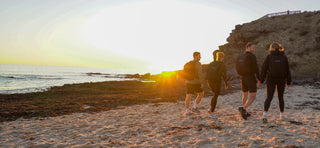
Whether rucking city laneways, powering through bushland trails, conquering the Outback or striding along sandy beaches - this pack from our proudly Australian business has you covered.